
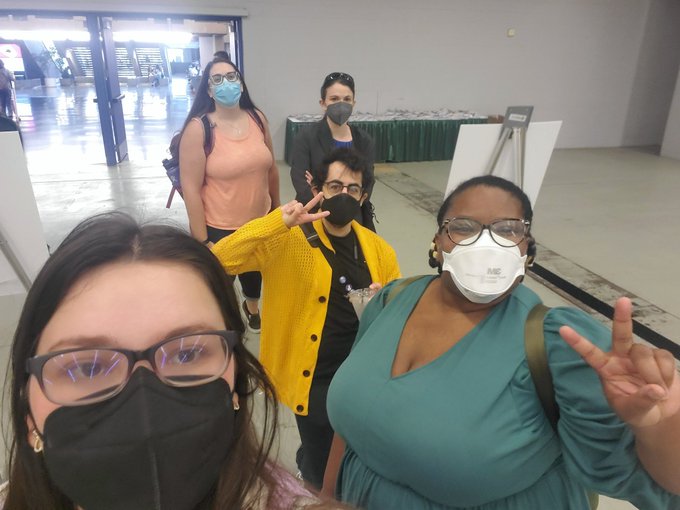
Afkhami lab has been back out at conferences … Here is the group at Ecological Society of America Meeting in Montreal!
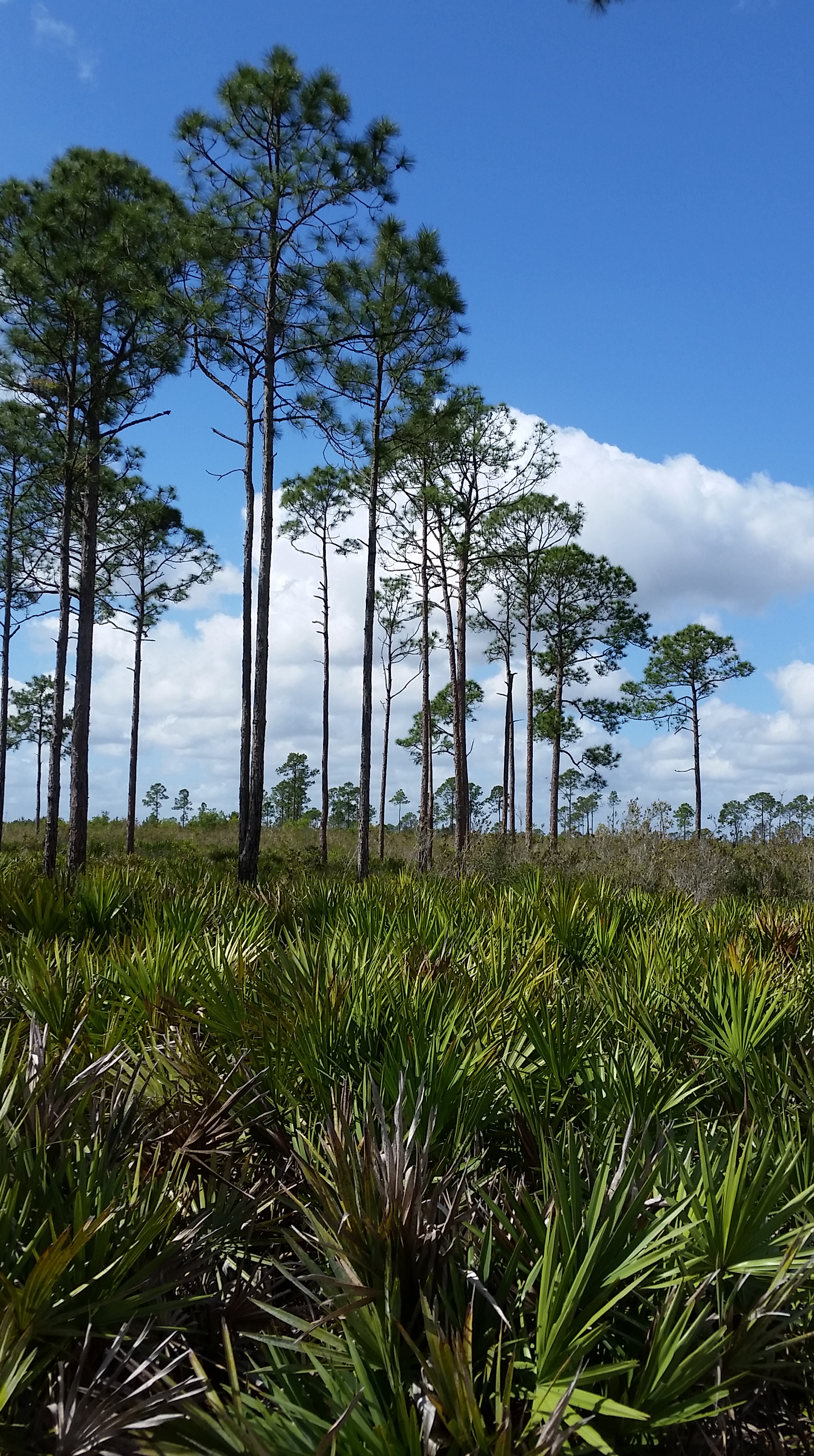
Kasey Kiesewetter has a new paper in New Phytologist on how habitat fragmentation influences microbial communities and plant-microbiome interactions! See it here.
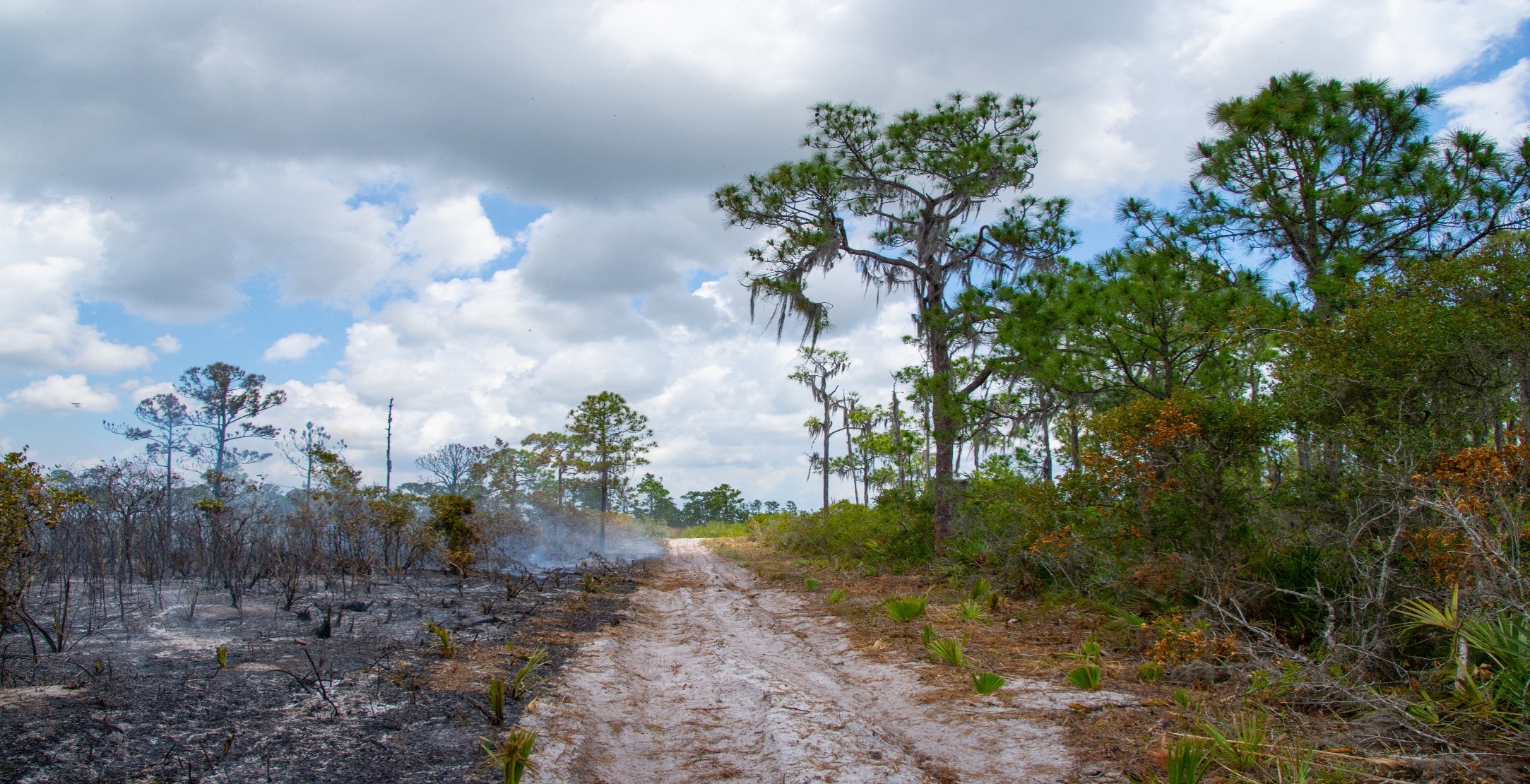
Congrats to Dan Revillini who recently published his paper “Microbiome-mediated response to pulse fire disturbance outweighs the effects of fire legacy on plant performance” in New Phytologist. More here!
Way to go Damian for publishing a great paper titled “Environmental stress destabilizes microbial networks” in the ISME Journal! Check it out here.
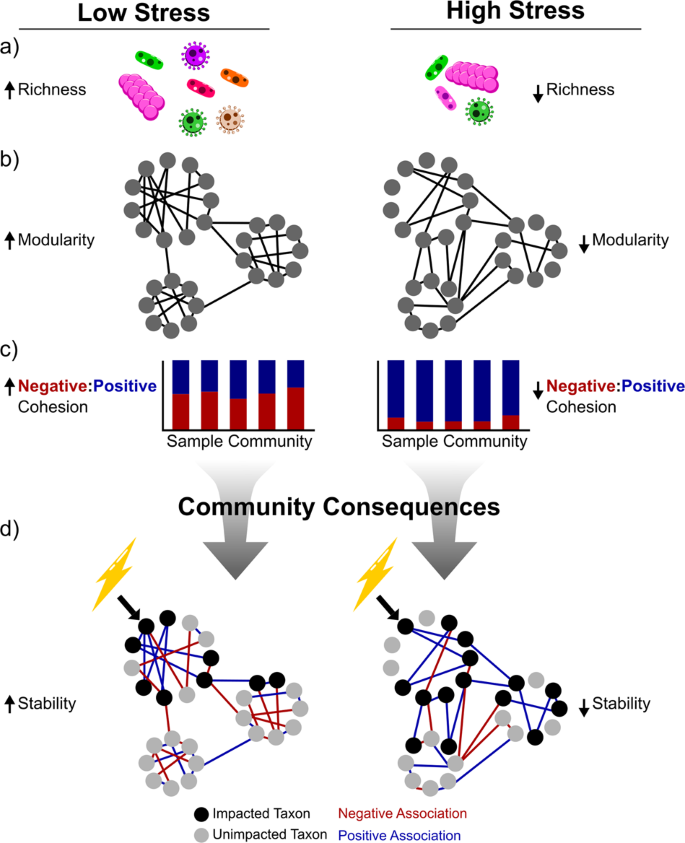
Figure from paper on the role for environmental stress in destabilization of microbial networks. Communities in high-stress environments (right) compared to communities in low stress environments (left) have less stable network properties. Communities under high stress are less species rich (a), less modular (b), and are less dominated by negative associations (lower negative:positive cohesion, c). The consequences for microbiomes (d) are that the reduction or loss of a taxon in response to an environmental disturbance (lightning bolt) can more easily propagate to the rest of the community (impacted taxa in black, unimpacted in gray). Positive associations (blue) are important pathways through which the effects on one taxon can cascade to impact other taxa in the community because: (1) the loss of a facilitator reduces the facilitated taxon’s fitness and/or (2) positively associated taxa are likely to be impacted by the same environmental factors (i.e., their niches strongly overlap).
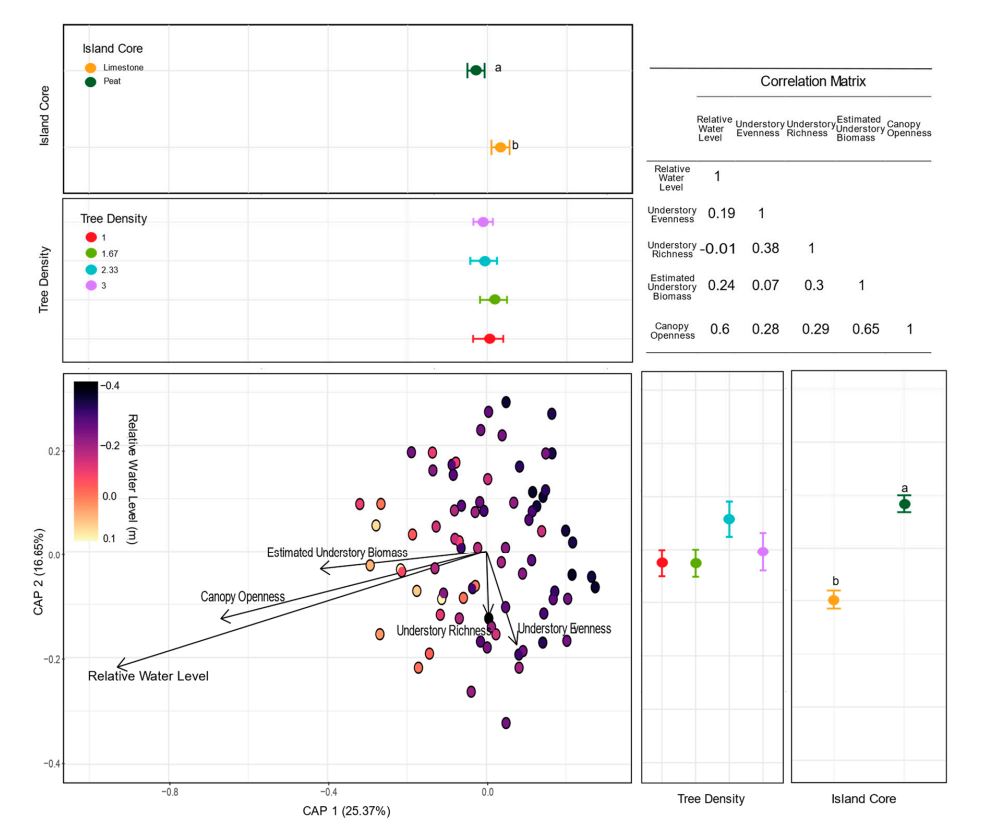
Brianna published a wonderful paper “Diversity and Structure of Soil Fungal Communities across Experimental Everglades Tree Islands” in Diversity! She shows that restoration decisions have enduring effects on microbiomes 15 years later. Learn more here.
Check out this neat article in the Highlands News-Sun on the Archbold research!
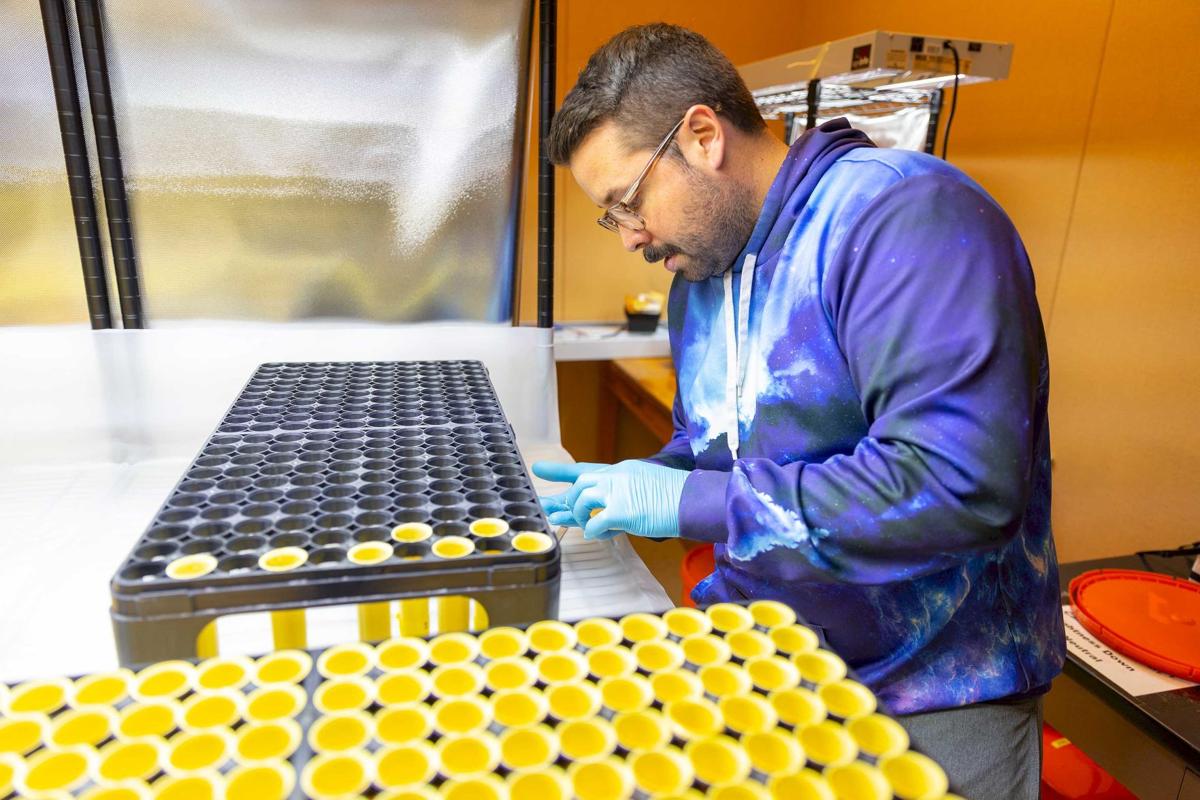
The Afkhami and Searcy labs were awarded an NSF DEB grant entitled ‘Microbial landscapes: Are microorganisms hidden drivers of species distributions?’ (5/19)
National Science Foundation, Division of Environmental Biology. “Microbial landscapes: Are microorganisms hidden drivers of species distributions?” ($851,244). 2019-2023. (PI M. Afkhami, coPI C. Searcy). Some basic details here.
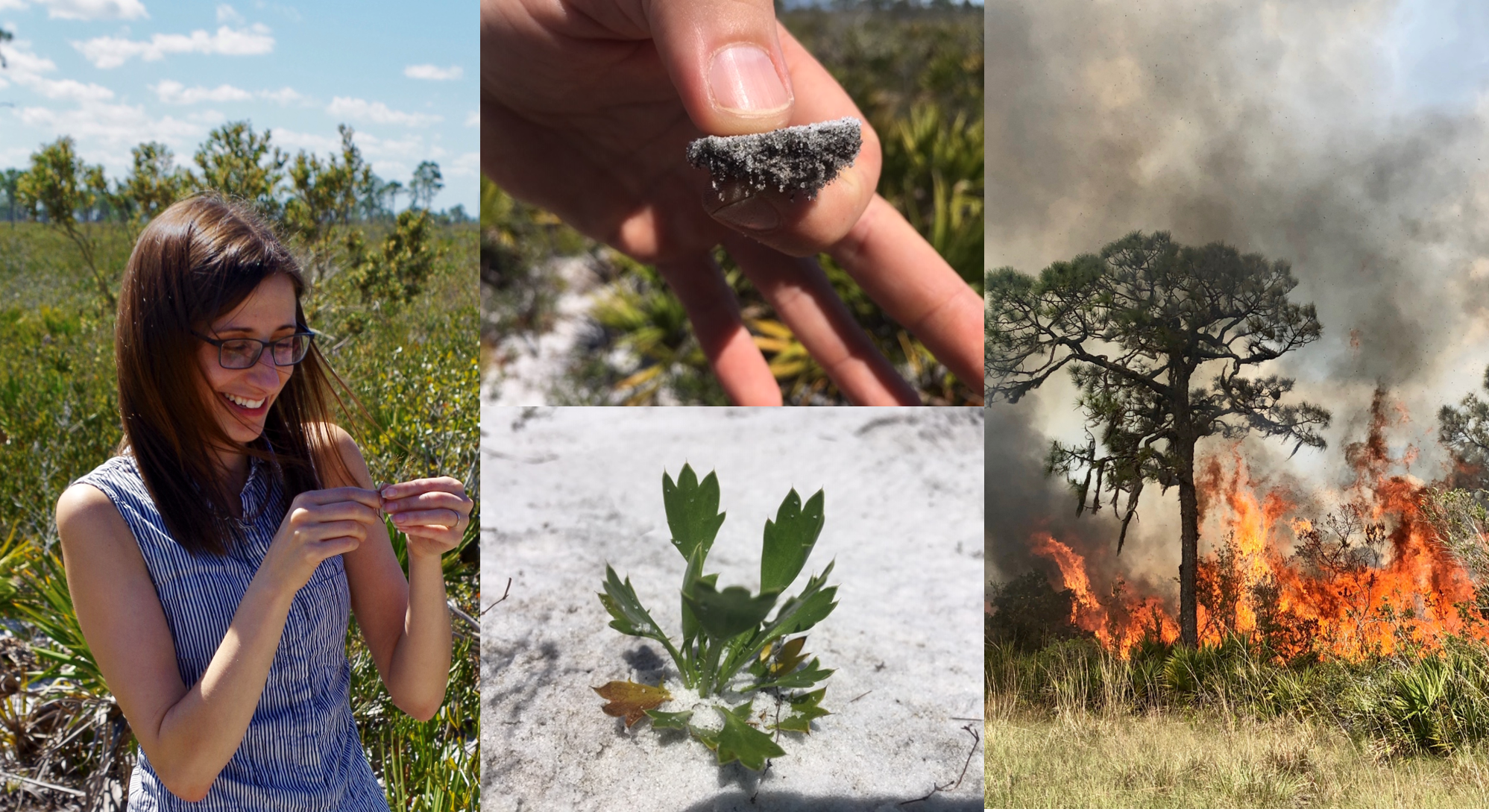
Kasey Kiesewetter was awarded the Forest Fungal Ecology Research Award from the Mycological Society of America!!!
Aaron David’s American Naturalist paper is out on  their website! The paper is ‘Soil microbiomes underlie population persistence of an endangered plant species’ (4/19)
Check out this summary article or the forthcoming paper.
Michelle is named the University of Miami’s Faculty Mentor of the Year thanks to the awesome efforts of her students and colleagues! (4/19)
Kasey Kiesewetter’s Florida Native Plant Society Endowment Research Grant application was selected!
Congrats to Brianna Almeida for being awarded the NSF GRFP! (4/9/19)
Way to go! Check out this article about Brianna and two other UM Biology Department Graduate Students who got the GRFP this year!
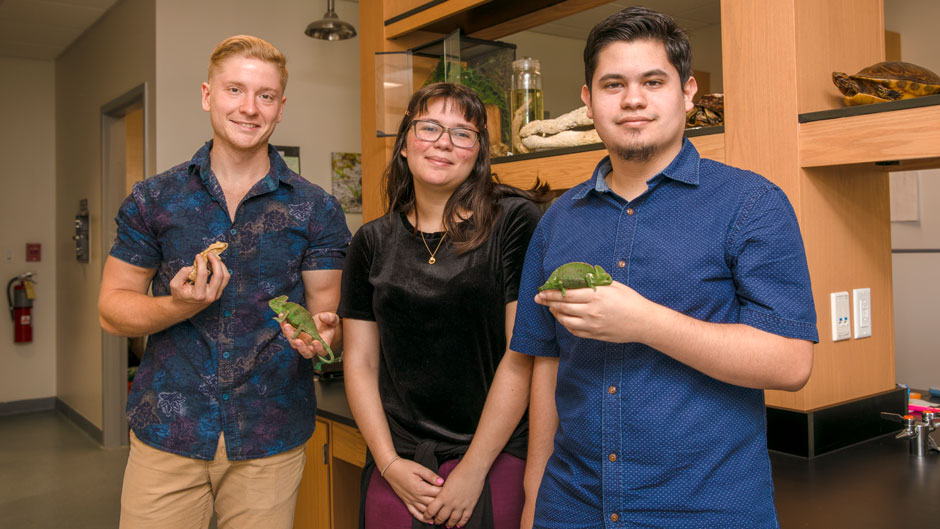
Kasey Kiesewetter, Christine Pardo (Feeley lab), and Brianna Almeida’s proposal to look at microbially-mediated edge effects on invasions of a fragmented landscape was selected for funding (the FLEPPC Julia Morton Invasive Plant Research Grant)!
Congrats to Kasey Kiesewetter for being awarded the NSF GRFP!
We’re so proud of all that you have accomplished; it is SO great to have you in the lab. Can’t wait to see your research make an impact on management of species interactions in imperiled South Florida Pine Rocklands. (4/3/18)

Congrats to Aaron David on his new position at the USDA! We miss you, but well done. Great job with all the Florida Scrub research!! (4/2/18)

Congrats to Kasey Kiesewetter for receiving the Dean’s Summer Research Award! (3/18)
Sathvik’s paper in Molecular Ecology‘s special issue on “The Host-Associated Microbiome is out! Check it out here! (3/14/18)

Afkhami and Wilson labs have started joint lunches!
Aaron and Khum’s paper in Ecology is out! Check it out here!

Michelle’s legume paper in Ecology is out! Check it out here!

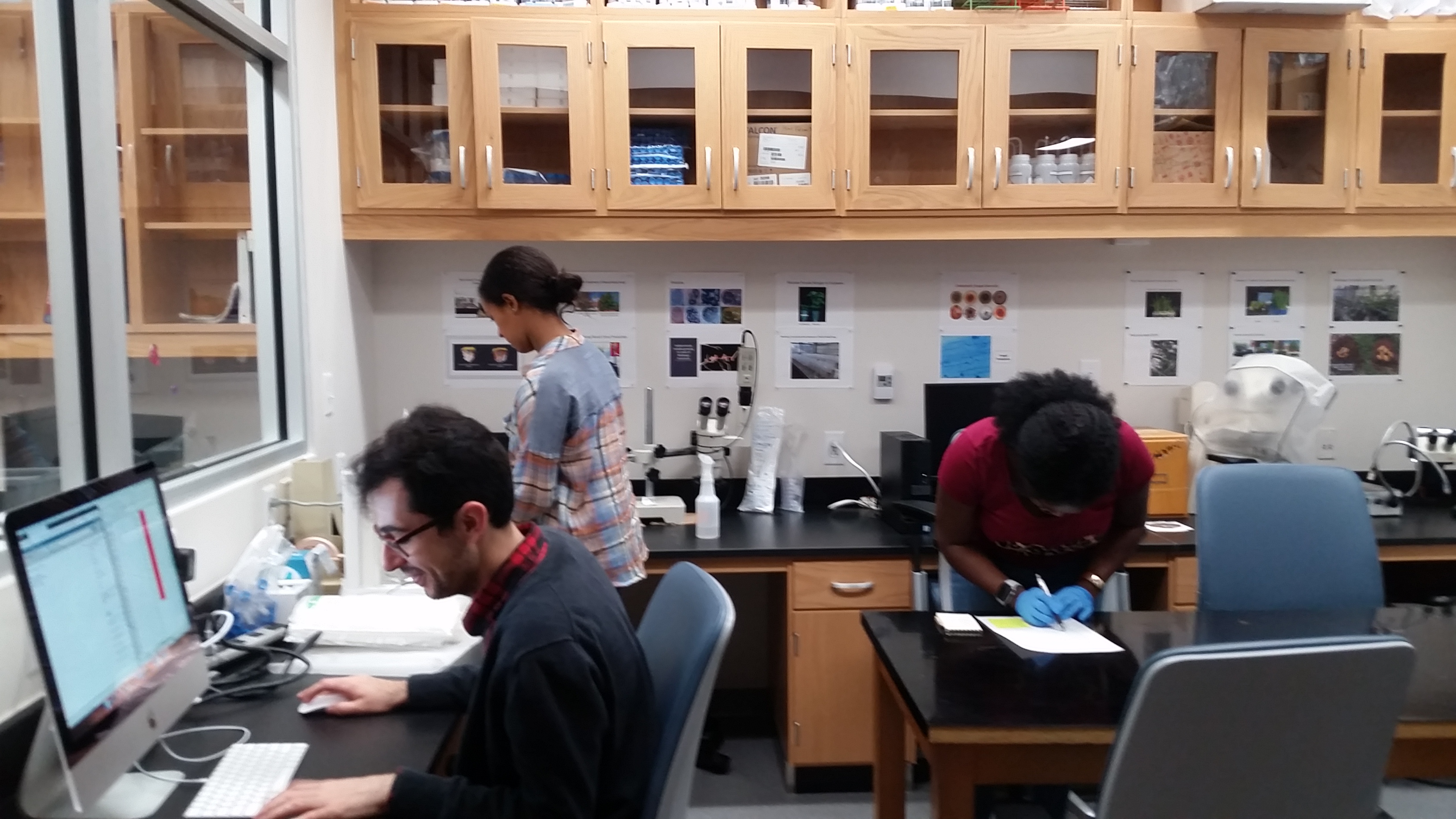
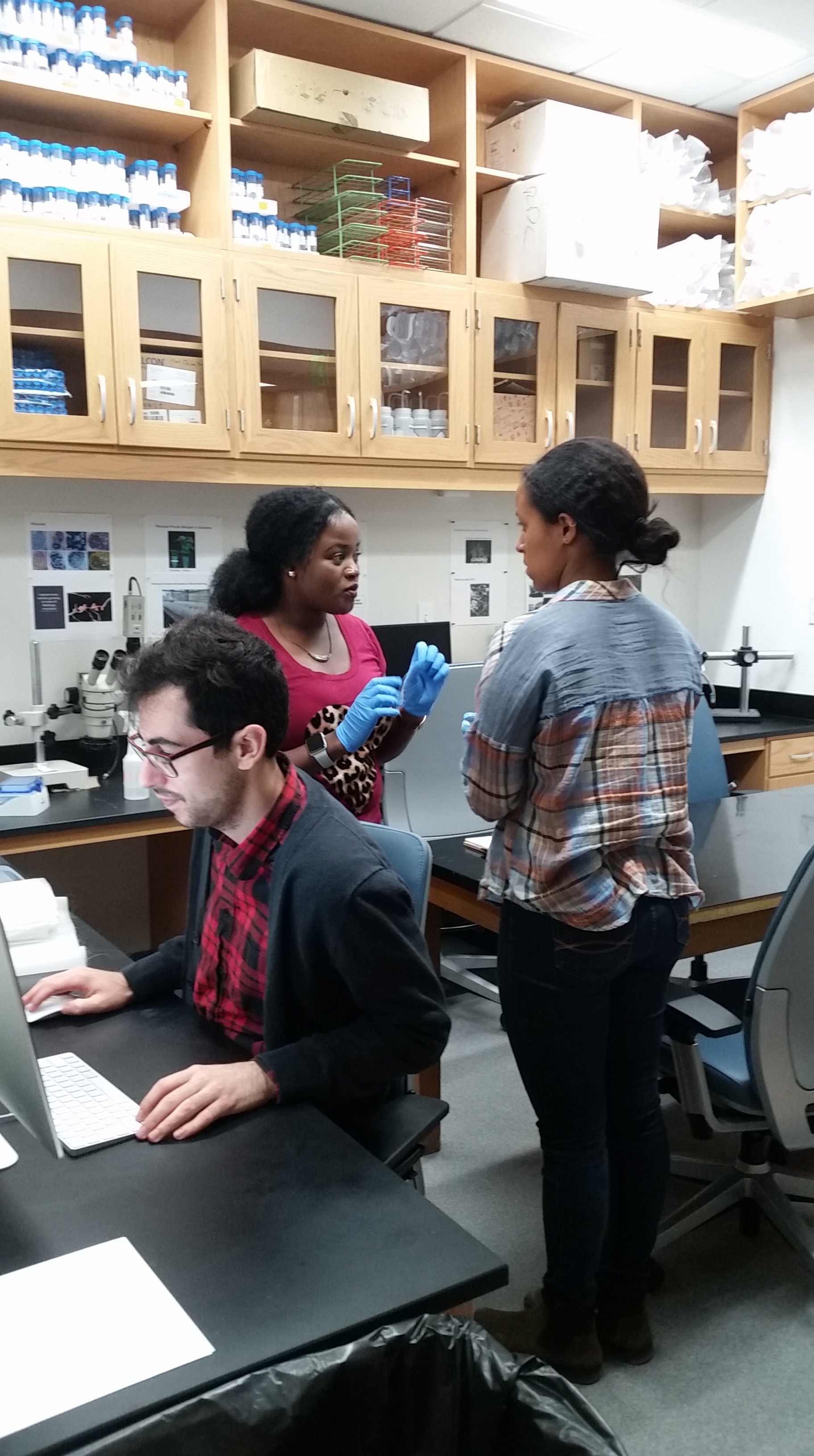
Blessing, Kailani, and Damian working in the lab!
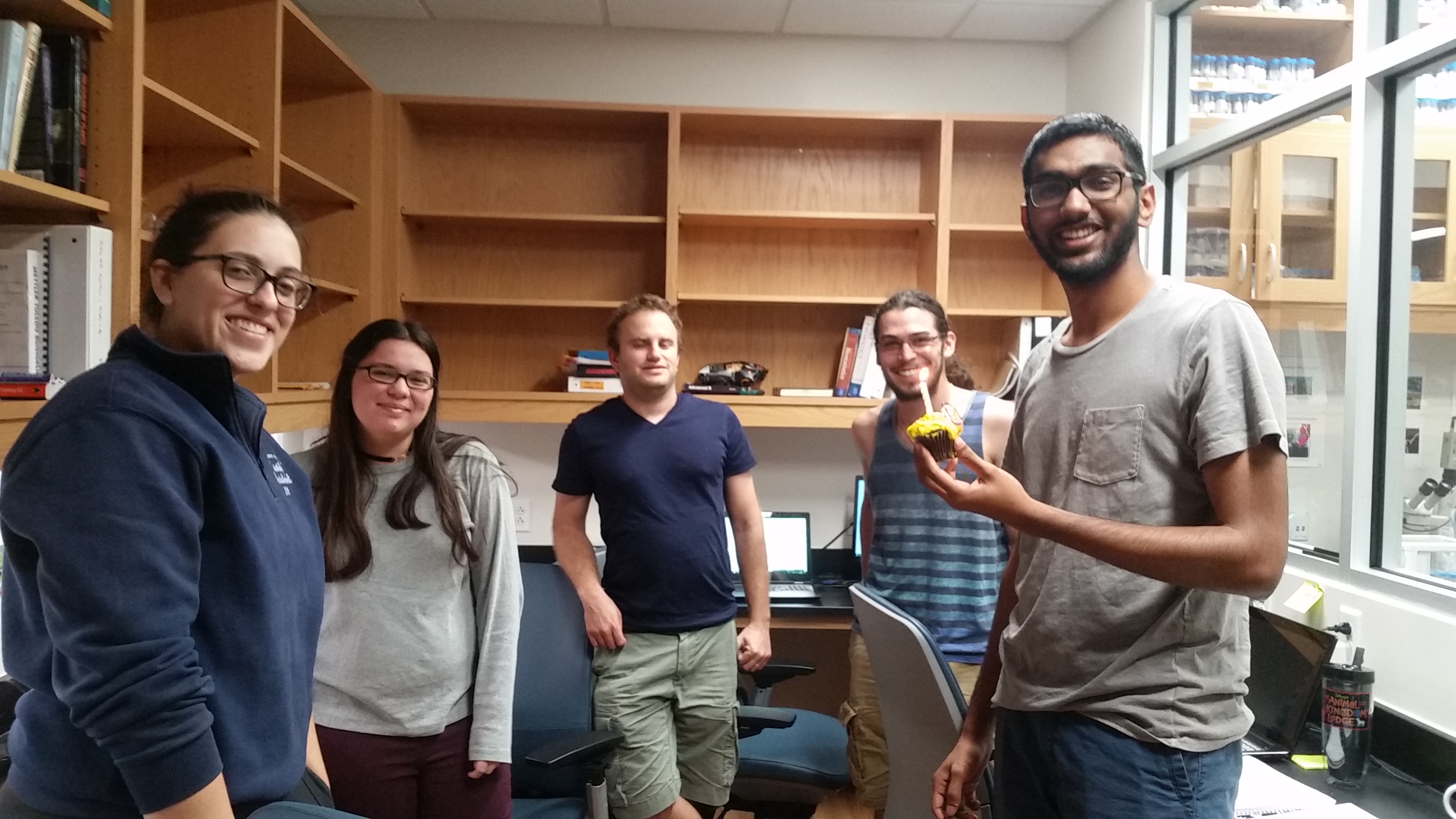
Celebrating Sathvik’s Birthday …
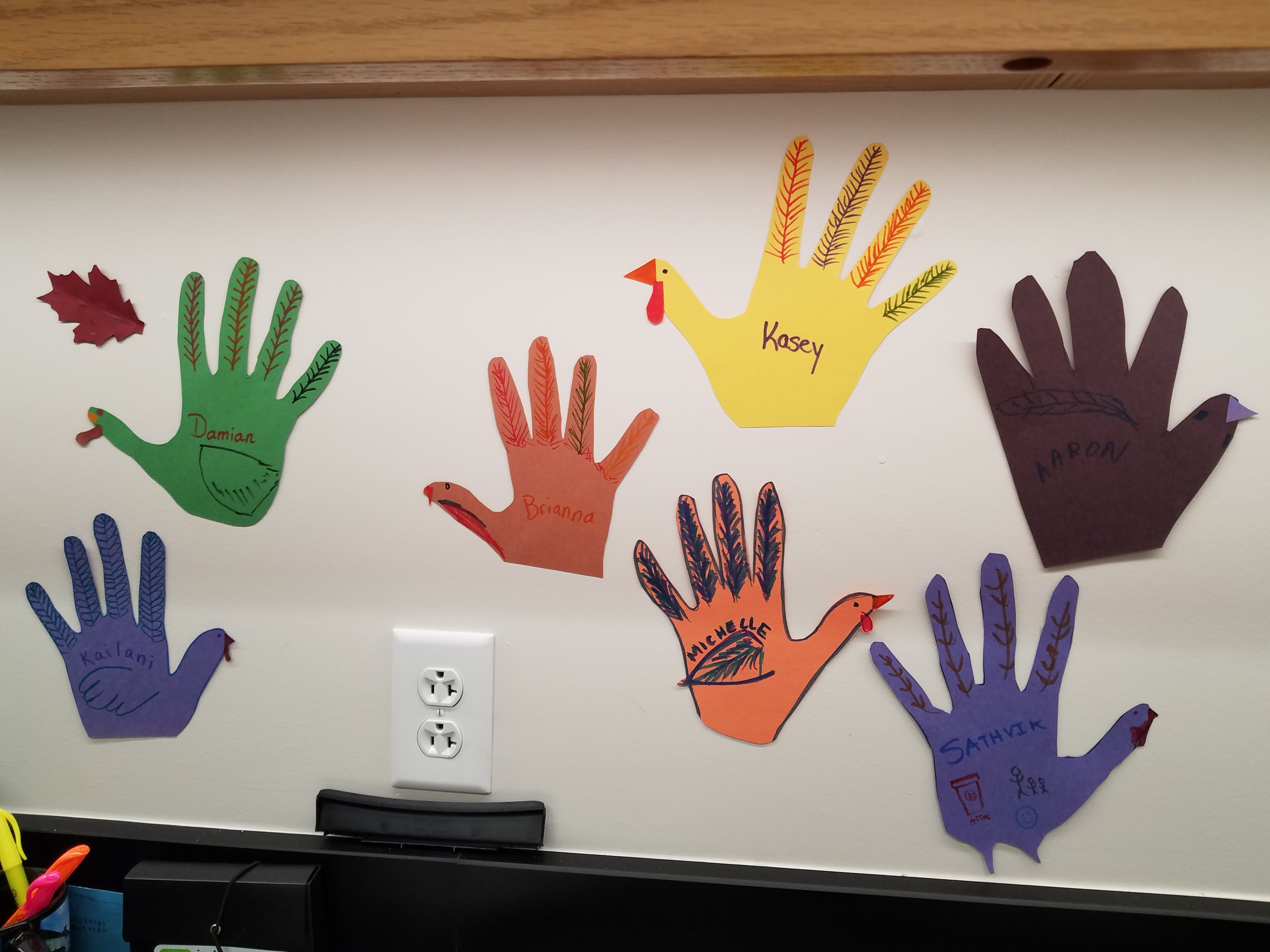
Getting ready for thanksgivings!
Michelle gives a plenary talk at the Bionomic Workshop at the Max Planck Institute for Evolutionary Biology in Plön, Germany (https://bionomics.github.io/)
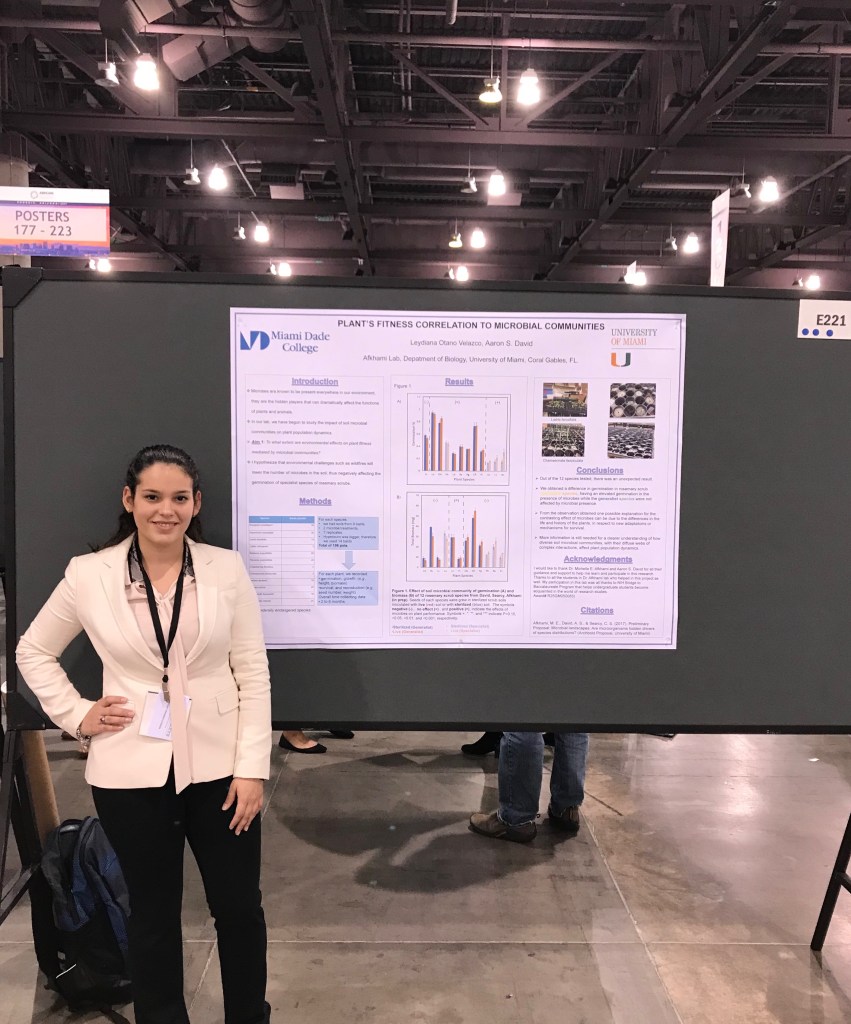
Undergraduate Researcher and UM-Miami-Dade College Bridge Program Student, Leydiana Otano, presented at the Annual Biomedical Research Conference for Minority Students (ABRCMS) in Phoenix, AZ!
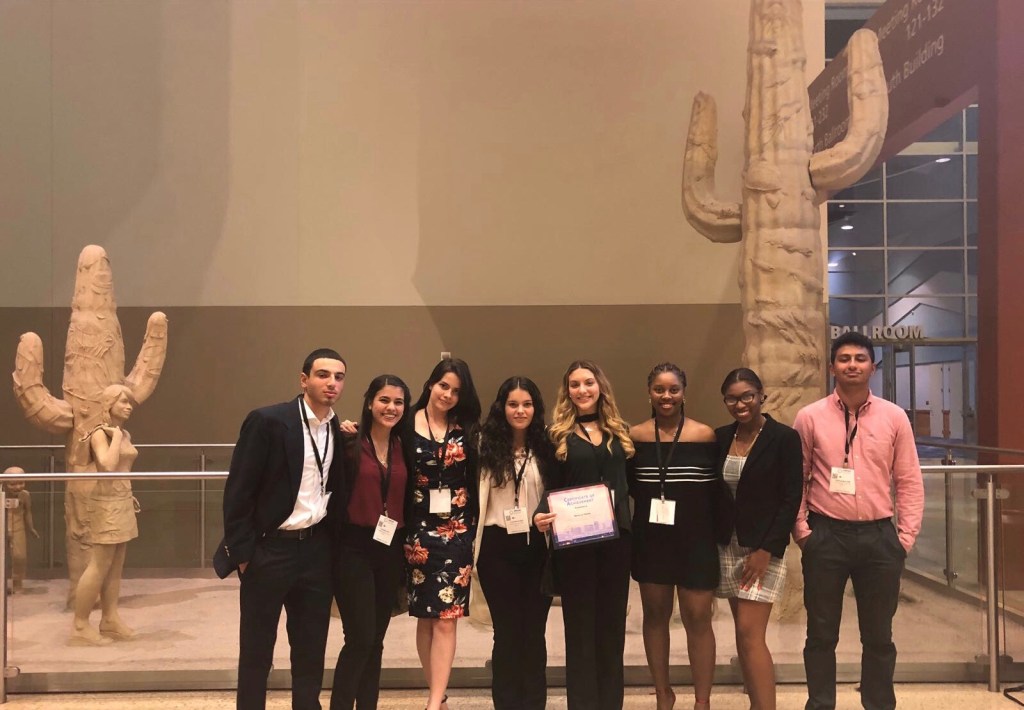
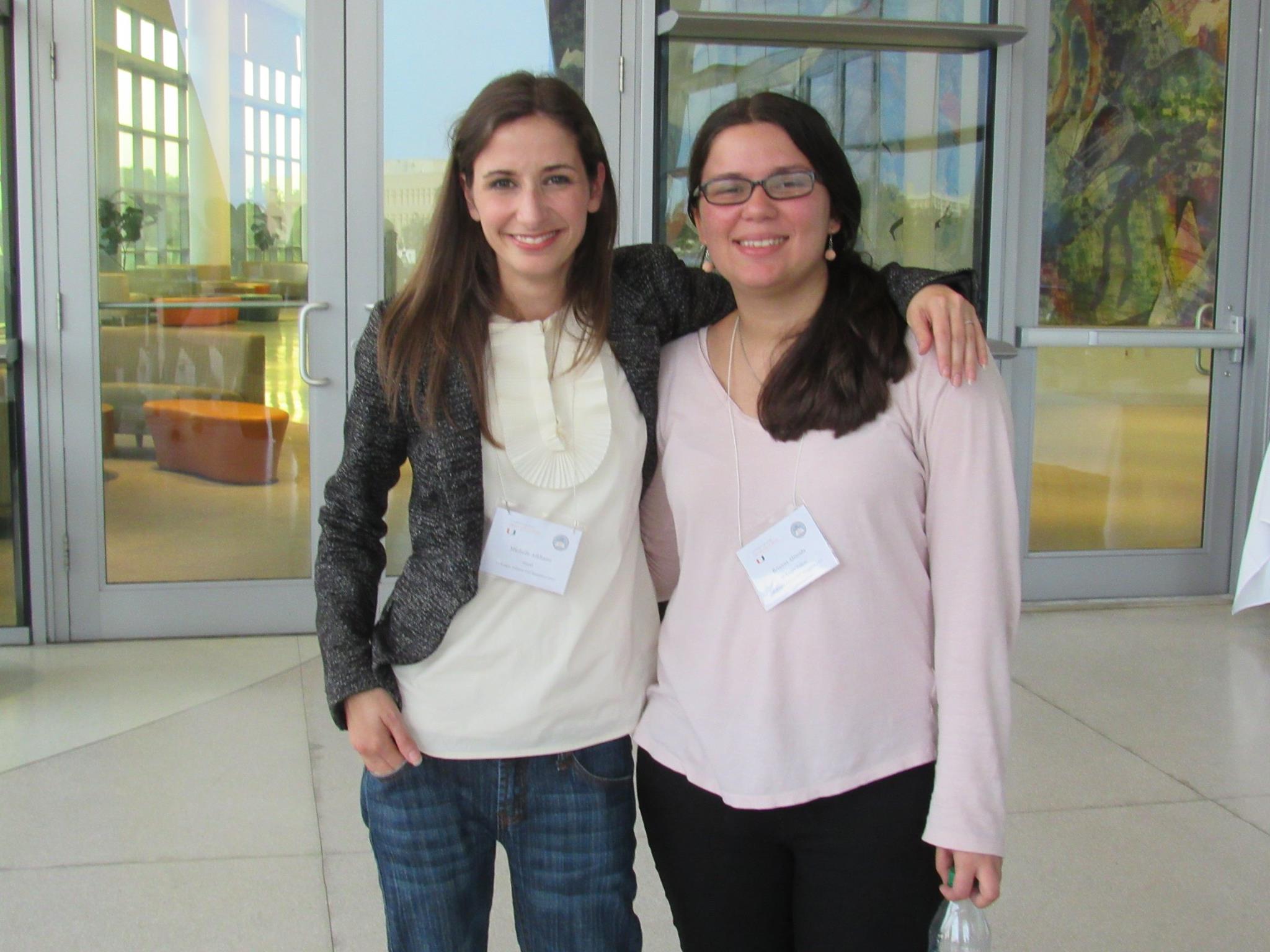
Brianna and Michelle attend McKnight Reception to honor Brianna and the other McKnight fellows!
Aaron David’s awesome paper came out in Molecular Ecology!
His paper, entitled “Disentangling environmental and host sources of fungal endophyte communities in an experimental beachgrass study” is available at here.
Damian Hernandez’s transcriptomic paper published in Nature Communications!
Damian’s co-first author paper, entitled “Transcriptomes and neurotransmitter profiles of classes of gustatory and somatosensory neurons in the geniculate ganglion, is available here.

This paper from Damian’s work as a technician in Dr. Chaudhari’s lab uses transcriptomic and functional profiling of individual neurons in the geniculate ganglion. These neurons consist of two sets: one set innervating the pinna of the outer ear and another set is part of the first neural relay in transmitting info about taste perception.
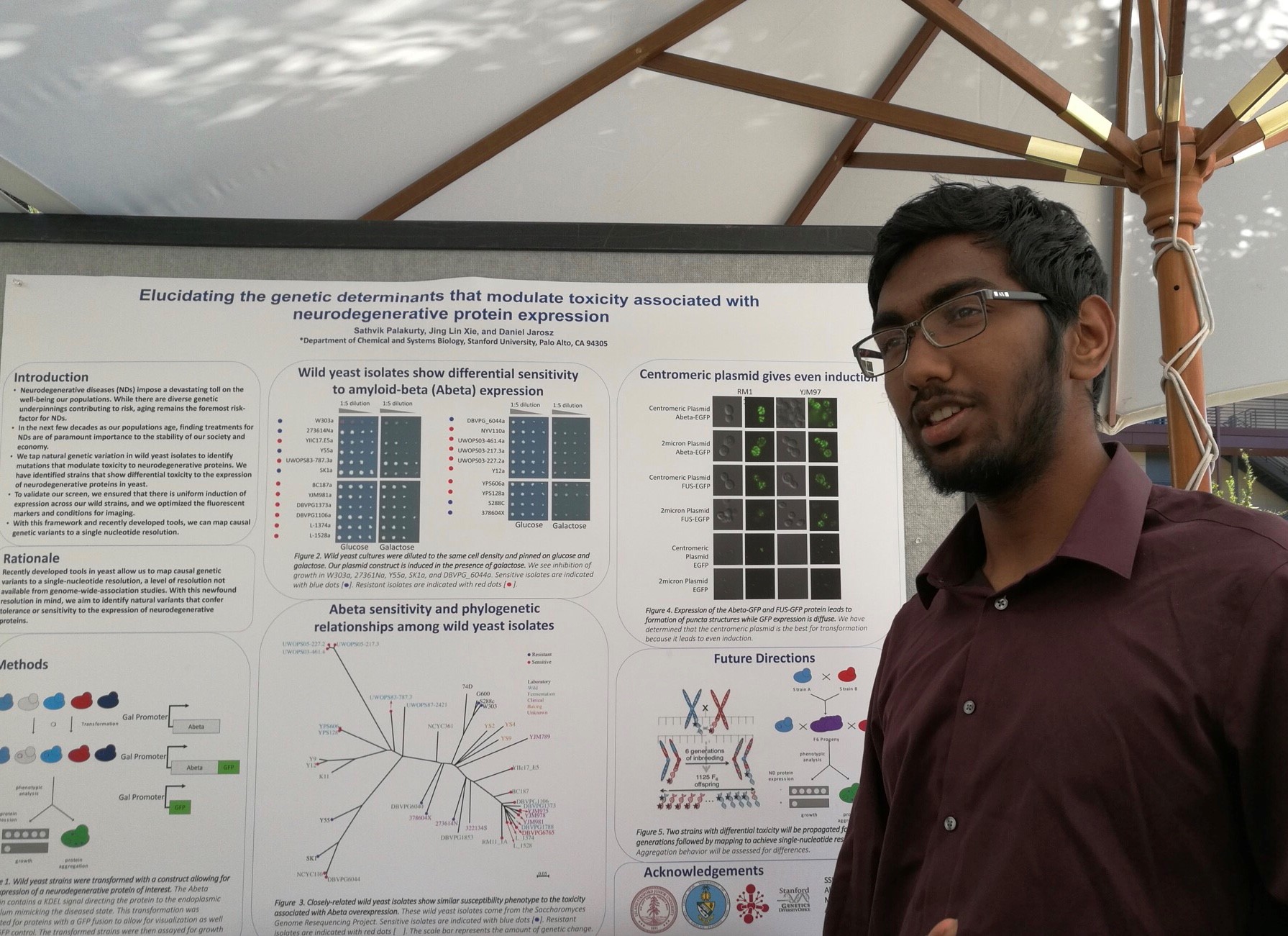
Undergraduate Sathvik Palakurty selected for Stanford University’s Summer Research Program as a Genetics Scholar!
Kasey Kiesewetter awarded the Envoy Grant for research on effects of fragmentation on species interactions of the imperiled Pine Rocklands!
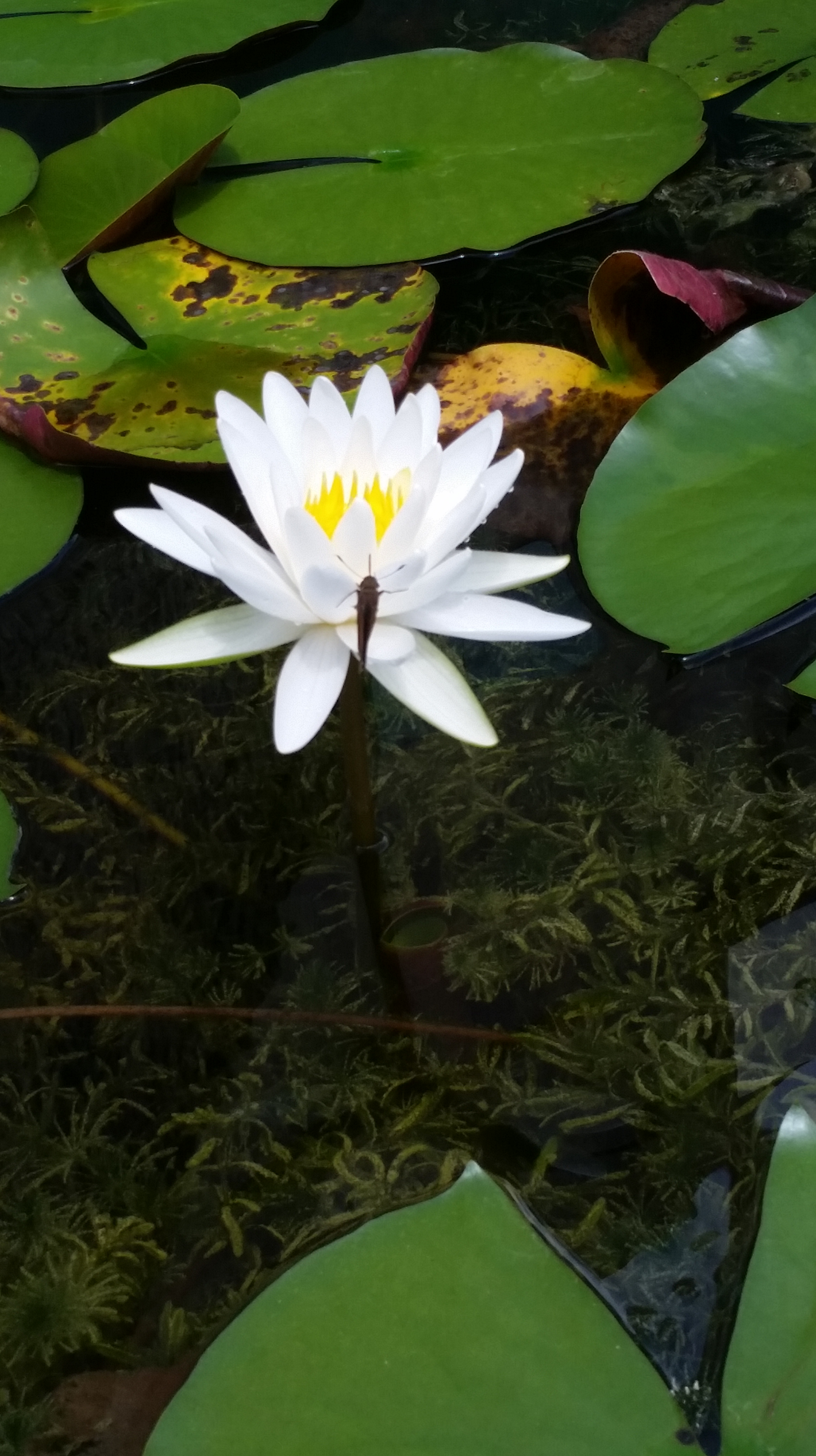
Check out Brianna Almeida’s undergraduate honors thesis on Everglades’s white lilies here!
 AFKHAMI LAB